

Help commercial buyers describe the property and scope when they enquire about carpet cleaning. Collect the location, site context, timing preferences and coordinator's details, then explain how your team prepares an assessment or proposal.
The first form should make the next conversation easier, without pretending that a request confirms a service agreement.
Identify the property and the person coordinating it
Ask for enough site context to direct the first commercial service conversation. Ask about the property type, location and contact person's role. A facilities manager arranging a site discussion may have a different task from a tenant asking about one room.
Let the person describe the area and reason for the enquiry without demanding an exact measured scope at first contact. Ask whether they are considering a single service or discussing an ongoing arrangement. Treat either answer as context, not an accepted contract.
Ask about access and timing without accepting them
Give the enquirer room to mention occupancy, access windows and proposed timing. Your team still needs to assess those requirements. A preferred evening or weekend date should not generate a confirmation that the business has accepted that schedule.
Explain the next step for clarifying access and scope. Where a site visit or conversation is your normal process, say who arranges it and how the customer can ask questions. Keep preparation or technical instructions under the approval of the team delivering the service.
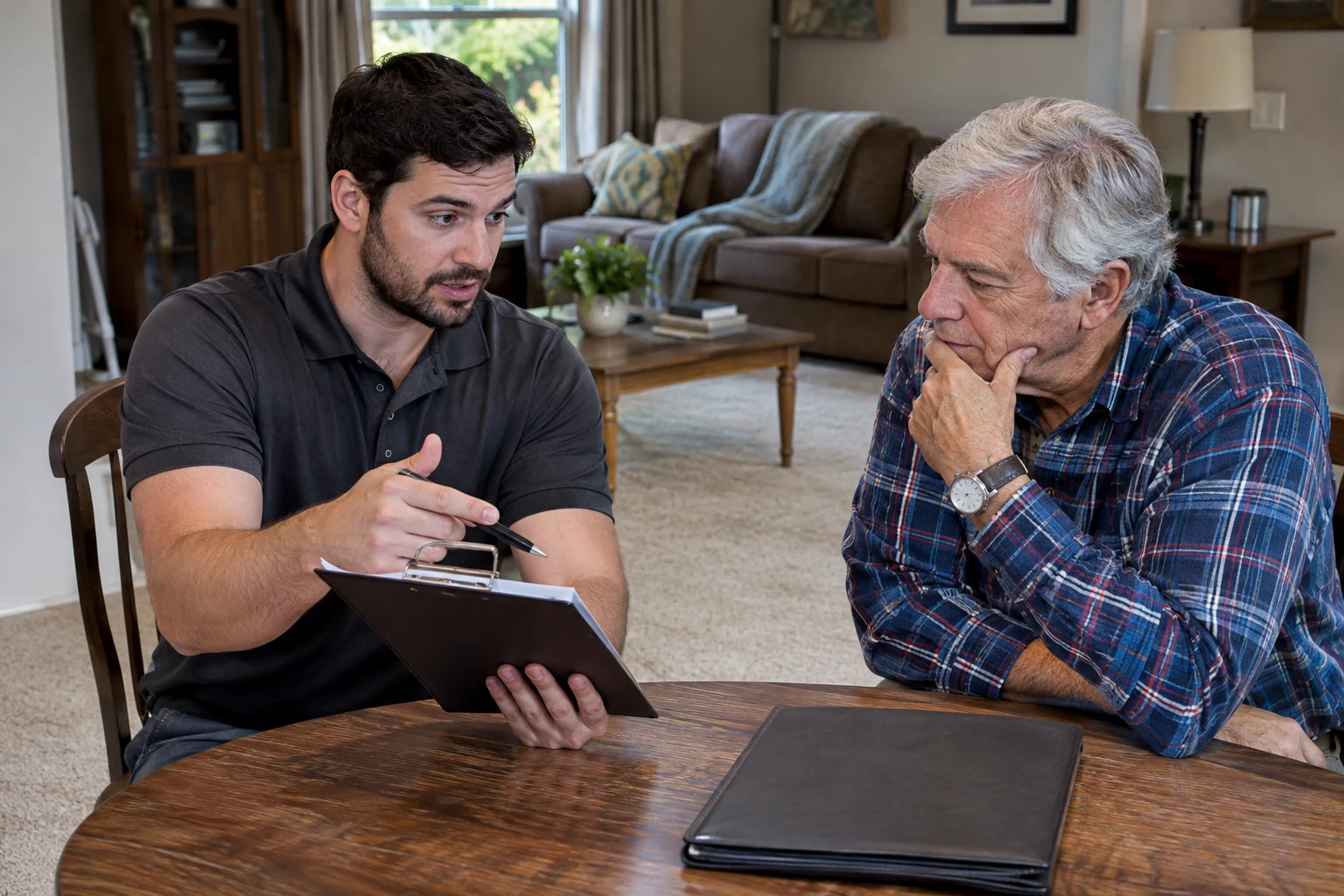
Explain what an assessment produces
A commercial buyer should understand whether the next stage is a discussion, site review or proposal. Describe the actual output and which decisions follow it. Avoid treating every commercial form as an instant price request if your business prepares a scope first.
Have the service team confirm what the proposal normally addresses, such as agreed areas, supported services and scheduling arrangements. Do not promise universal documentation, compliance outcomes or building readiness because another contractor advertises them. State only what your company has agreed to provide.
Preserve context in the handoff
Carry the property type, site information and stated timing into the record used by the person responding. If a business buyer reaches a general inbox, make the commercial context easy to recognize. Assign responsibility so the enquiry does not wait while several people assume someone else is preparing a reply.
A request involving several sites needs an appropriate conversation rather than an artificial one-address limit. You can ask for a broad description initially and gather detailed site records later through the business's chosen process. Keep the first form focused on starting that exchange.

Review commercial opportunities separately
Record whether the work fits, whether an assessment occurs and whether a proposal is issued. If the prospect pauses or chooses another option, retain the reason when they supply it. Do not label every unreturned message a price loss.
Marketing for carpet cleaning companies should reflect these commercial decisions in the page and follow-up. A household-focused campaign cannot be evaluated as a commercial-account strategy merely because one business contact used the form. Use real stage definitions and customer context to decide what needs improvement.
Put it into practice
Build a clearer commercial enquiry path
Tell ClickK which commercial work you accept and how you prepare proposals. We can discuss website content and follow-up around that process.
Discuss commercial enquiry marketing