
Commercial locksmith marketing content should help a business buyer assess service fit without asking them to disclose sensitive security information. A facilities contact needs to understand what your company offers and how a request is reviewed.
Build the page around verified capabilities, buyer responsibilities and a controlled handoff to the qualified team.
Identify the services and buyers you actually support
List the commercial services the business offers and have the responsible technician confirm the boundaries. Do not imply support for every lock, credential system or property type. A broad security claim is difficult for a customer to interpret and may exceed the company’s actual capability.
Choose the buyer you are writing for: a small-business owner, property representative or facilities contact, for example. Their first question may concern the service process rather than an emergency lockout. Keep that decision path distinct from urgent residential messaging where the business offers both.
Explain how a request reaches the right person
Describe the initial enquiry and review step in plain language. The page can say what general information helps the office route a request and who discusses the scope. Technical compatibility, authority checks and final service decisions remain with your company’s qualified process.
Avoid promising a schedule, final quote or account arrangement before it has been reviewed. If the business offers ongoing relationships, explain only the approved approach and terms. Marketing copy should not create an implied support contract by using phrases such as unlimited access or guaranteed response.

Keep public examples free of sensitive details
Genuine project evidence needs permission and accurate context, but commercial access work can involve information that should not become a marketing story. Do not publish access codes, key arrangements, customer security procedures or identifying operational details.
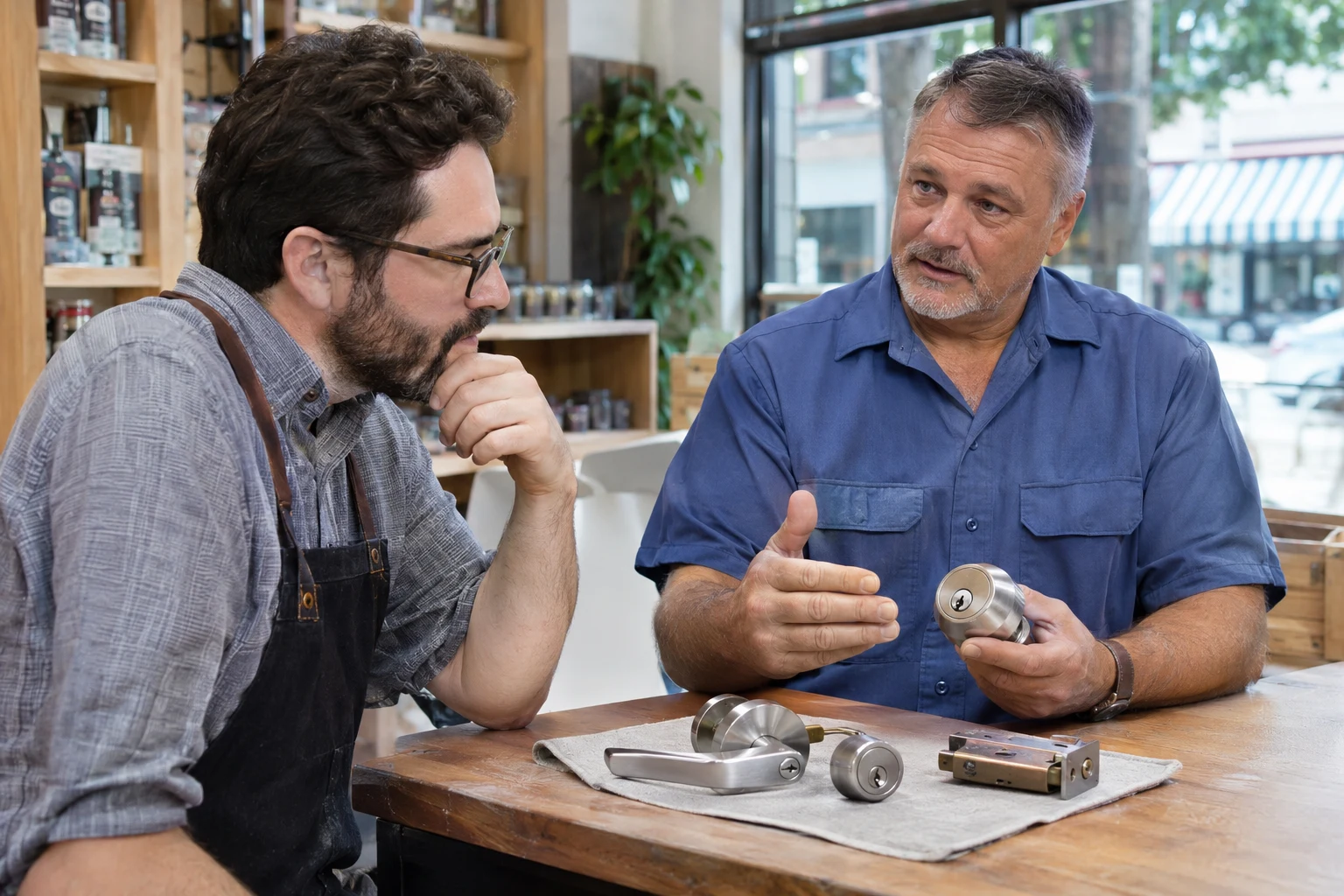
If no suitable approved example exists, explain the service process instead. A generic business conversation image can support that explanation when presented honestly. It cannot become evidence that the company completed a specific client’s security project. Keep all internal provenance and permissions outside the customer-facing page.
Ask a small set of appropriate first questions
Collect the contact’s role, general property type, requested service, area and preferred reply route. Give the person a way to describe an uncertain request. Leave sensitive documents and detailed access information to the business’s appropriate controlled process after the initial review.
A model prompt is, “Briefly describe the service you would like to discuss; please leave access credentials and other sensitive security information out of this form.” The implementation should also avoid unnecessary fields, with a human owner ready to handle the resulting conversation.
- Confirm offered commercial service categories.
- Explain scope review and customer next steps.
- Separate existing-account contacts from new enquiries where useful.
- Keep technical verification and access details in the proper process.

Measure whether the content improves fit
Ask the office which commercial enquiries progress and which need repeated clarification. Use those patterns to improve the page and form. A rise in submissions alone does not show that the right businesses understood the offer or that the team could support the work.
ClickK’s digital marketing support for locksmiths can connect commercial capability information with agreed customer workflows. Your business confirms claims, compatibility, authority and delivery. Begin with a clear description of the work you accept and a first contact that protects the information customers should not share publicly.
Put it into practice
Choose a useful next step
Review the commercial page with a qualified technician and remove claims or form fields that exceed the first-contact purpose.
Discuss your marketing priorities