

Commercial roofing content planning should reflect how property and facility teams assess a contractor. A page copied from residential marketing may describe roofs while missing the questions that determine whether a commercial buyer can progress.
Organize the content around verified capabilities, scope review and the buyer’s purchasing process.
Identify the commercial relationships you offer
Decide which buyers and property types fit the business. A company that handles selected commercial projects should not imply an ongoing national account service. Name only the services, territory and relationship types the operations team can confirm.
Map the audience’s role. A property manager, facility representative and purchasing contact may each need different information. Avoid making one imagined “commercial customer” stand in for every decision. Choose the group the business actually wants to help and state the next conversation it can offer.
Separate public capability information from private scope work
The public page can explain offered services, coverage and the initial assessment process. Site-specific condition, proposed materials, schedule and final scope need the roofing company’s qualified review. Marketing should not turn a general capability statement into a recommendation for a particular building.
Likewise, explain how the business can provide current documents through an appropriate exchange instead of posting sensitive account or project information publicly. Verify credential and insurance statements before using them. Any contractual or technical interpretation belongs with the responsible qualified person.

Build a content list from recurring buyer questions
Ask the office and estimators what commercial prospects need before requesting a scope discussion. Useful subjects might include how enquiries are reviewed, what property information helps the first conversation and how updates are coordinated. Write only what the business can substantiate.
Choose page ownership carefully. A broad commercial capability page, a specific offered-service page and an informational article have different jobs. Do not create several near-identical pages because different people use slightly different phrases for the same requirement. A concise coverage map can prevent overlapping content before drafting starts.
- Which offered services fit the buyer’s property needs?
- What information begins a useful scope discussion?
- Who reviews the request and answers technical questions?
- What approved evidence can the buyer verify?
Select evidence that respects confidentiality
Use real project examples only with permission and accurate context. Describe the company’s role without disclosing a client, tenant, address or operational detail that has not been approved. A generic building image should not be presented as a completed commercial project.
If approved examples are unavailable, explain the company’s actual process and capability boundaries. Do not invent a case study to fill a portfolio gap. A truthful explanation of what happens after contact is useful buyer information even without a dramatic project story.
Connect the page to an actionable enquiry route
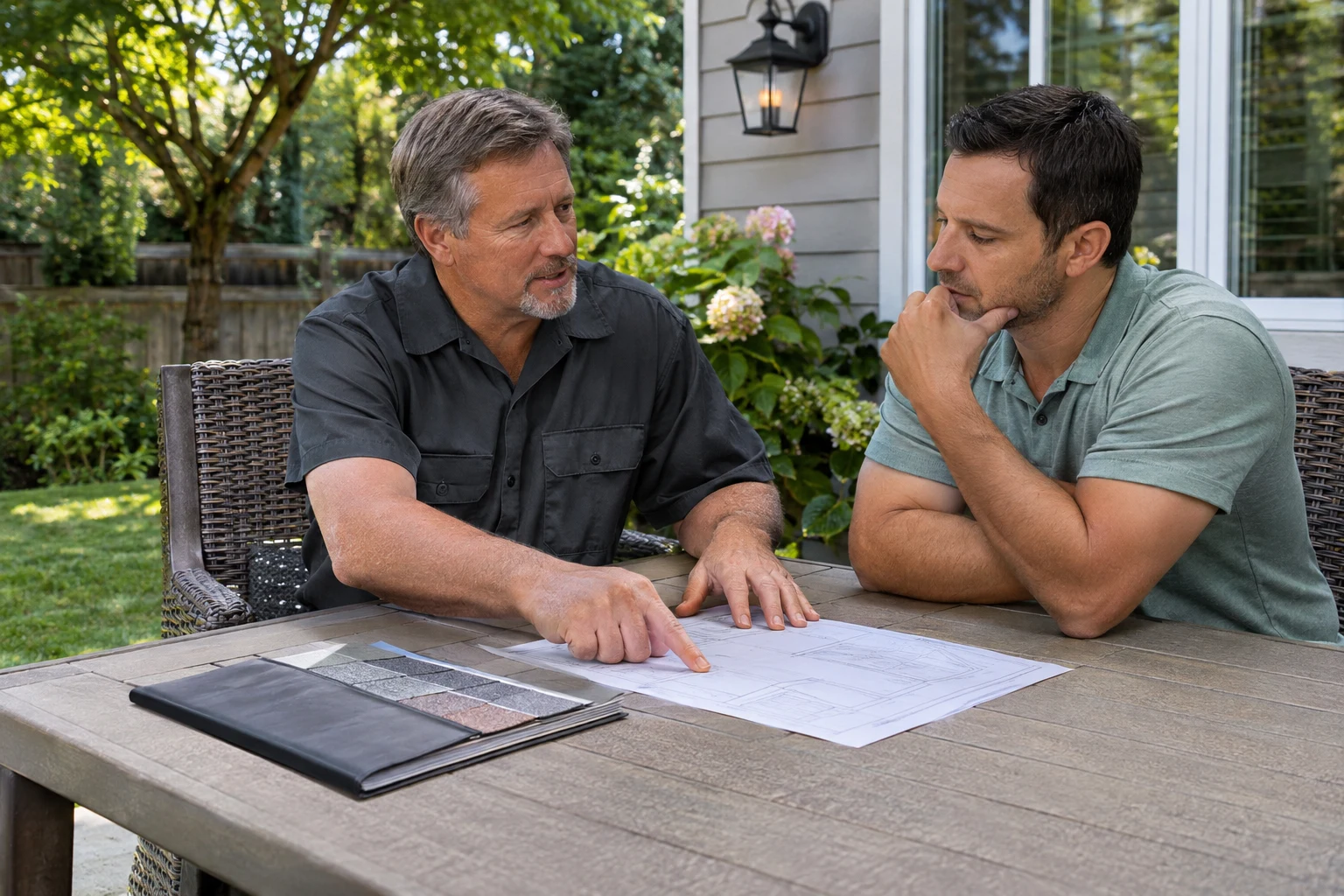
Ask for general property type, location, requested service and a contact role. Keep sensitive site and access documents out of the first marketing form. Confirm that submission starts a review rather than automatically schedules a visit or creates an account commitment.
ClickK’s marketing support for roofing companies can align capability content, campaigns and enquiry workflows within scope. Your business supplies approved facts and handles assessment, quoting and delivery. Start with the questions that repeatedly delay the first useful commercial conversation, then build content that removes that uncertainty.
Put it into practice
Choose a useful next step
Gather the commercial buyer questions your estimators hear repeatedly and assign each to a page or human handoff.
Discuss your marketing priorities