
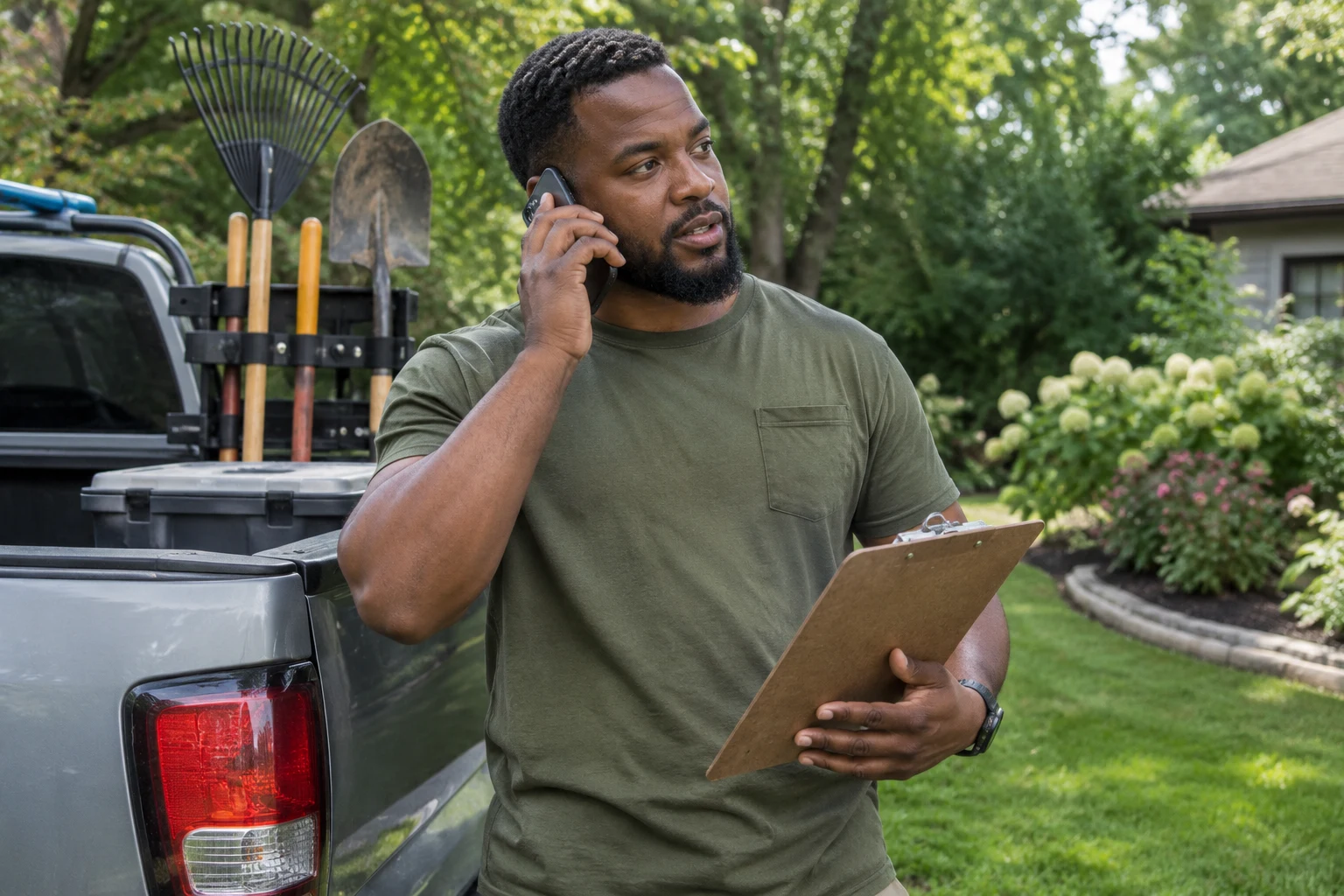
Landscaping estimate follow-up should help the customer make the next decision about the proposed work. Begin with the scope and the conversation already held, then ask what is needed to move forward.
A reminder works poorly when it ignores an unanswered question or implies a start date the company has not confirmed. Keep the estimator's record and customer message aligned.
Record what the estimate actually proposes
Keep the estimate version, service, date sent and agreed next step together. Identify whether the customer is considering ongoing maintenance, a design stage or an installation project. The office should not have to guess from a document title.
Record open questions alongside the proposal. If the customer needs a different scope or another household decision-maker must review it, that context should determine the next message.
Confirm receipt without pushing for an immediate yes
The first follow-up can check that the customer received the proposal and knows where to send questions. Reference the work in plain language and offer a useful next step. Avoid a generic sales message that makes the customer explain their project again.
For example: Thanks for discussing the garden renovation. Have you received the proposal, and is there anything about the planting scope or next design step you would like us to clarify? Use wording that matches the actual proposal rather than copying an unrelated template.
Respond to the decision behind the delay
A customer may be comparing scope, revisiting timing or waiting for another decision. Ask directly and record the answer. Do not assume silence means the price is wrong and automatically discount the work.
If the scope changes, send a clearly identified revision and confirm what it replaces. Your estimator approves pricing, inclusions and availability. A follow-up system should not make those choices on their behalf.
- Scope question: arrange the estimator's clarification.
- Timing question: ask the office to review current availability.
- Changed requirements: request a revised assessment before revising the price.
- No longer proceeding: close the opportunity and stop reminders.

Use automation for reminders with an owner
An internal reminder can help your estimator revisit a proposal at the agreed time. A customer message needs accurate context and a clear way to reply. Stop or revise the sequence when the customer responds, declines or requests a pause.
Keep service communications consistent with the customer's permissions and preferences. A new estimate request should not silently enroll someone in an unrelated marketing campaign.
Learn from proposals that do not proceed
Review the reasons customers give without turning them into assumptions about everyone else. Track whether the issue was service fit, scope, timing or another stated reason. Keep no-response records separate from confirmed losses.
Use the patterns to improve consultation explanations, estimates and marketing. The aim is to remove a real obstacle, not increase the number of reminders sent.
Put it into practice
Keep proposals and marketing connected
Our landscaping customer journey support can organize agreed records and reminders around your estimate process. Your team retains responsibility for site assessments, pricing and project commitments.
Discuss estimate follow-up