
Locksmith website trust starts with a recognizable business, accurate service information and a clear contact process. A visitor should be able to understand who will review the enquiry and what the website is actually promising.
Review the strongest claims first. Identity, availability, pricing language and real evidence matter more than another generic trust badge.
Say who is behind the contact route
Use the real business identity consistently across the website, enquiry form and messages. Explain whether the company provides the service itself or uses another arrangement, following the actual approved facts. A person requesting help should not have to guess which business they contacted.
Describe locations honestly. A mobile locksmith can serve an area without operating a customer-facing shop there. Do not add an unverified address, borrowed storefront photograph or “local office” wording to suggest otherwise. The business and any eligible profiles should reflect the way the company actually operates.
Make service and availability claims specific
List the services the company offers and the territory it can support. Automotive, residential and commercial work may need different enquiry paths. Avoid “all locks” or “all vehicles” claims when the technician must confirm compatibility and scope.
Review emergency language against actual answering and dispatch arrangements. Published hours, call handling and service availability are related but different facts. A phone being answered does not mean a technician can accept every request immediately. Remove response-time guarantees the business cannot substantiate.

Explain what a quote depends on
Give customers a truthful account of the next pricing step. The office may need to confirm service type, location, timing and relevant details before the business can define scope. Do not lead with a low figure that appears to represent the full job while leaving the main charges unexplained.
The locksmith pricing-page guide addresses how to communicate these distinctions. On the main service page, make the contact action clear and avoid presenting an enquiry form as a confirmed booking or accepted final price.
Use evidence with known context
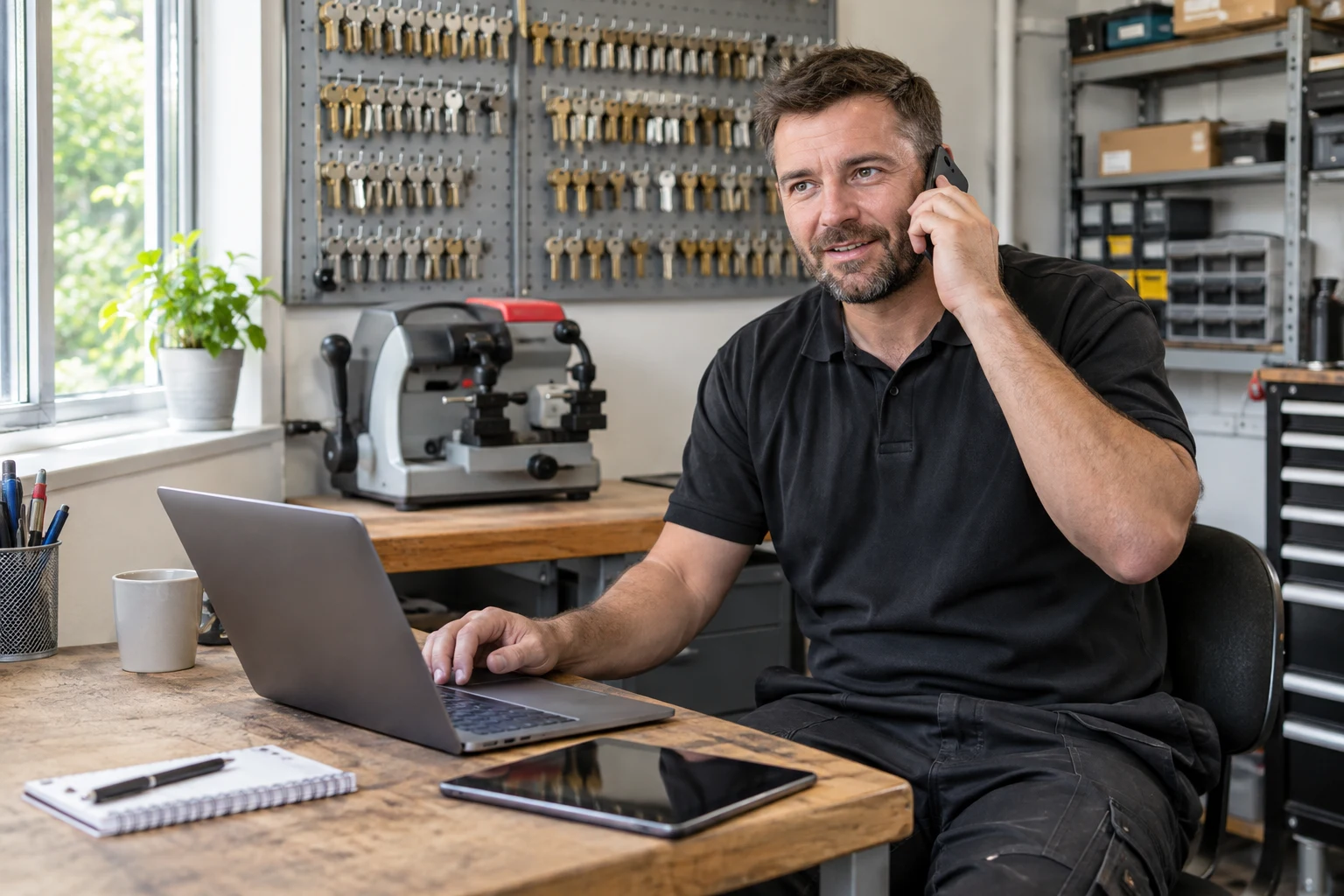
Check credentials, memberships, review excerpts and project images against current sources and permissions. A photograph of a locksmith at a workbench can provide context, but a generic scene should not be described as your own employee or shop. Real proof needs real provenance behind the public statement.
Do not copy allegations about other operators into your marketing. Explain your own identity and process instead. A business can help visitors evaluate its offer without claiming that every competitor with a different price or service approach is dishonest.
- Confirm the business name and contact details.
- Check service coverage and compatibility claims.
- Verify every credential and review excerpt.
- Test the call, form and reply routes on a phone.
Keep the first enquiry safe and useful
Ask for a general description, service location at the appropriate level and a reliable contact route. Do not request alarm codes, key codes or other sensitive access information in a general marketing form. Your technicians retain responsibility for any necessary identity and authority checks through the company’s proper process.
ClickK’s digital marketing support for locksmiths can align these pages with agreed enquiry workflows. Your business confirms service facts, compatibility, pricing and availability. Start with a claim audit and a working contact path before adding more promotional reassurance.
Put it into practice
Choose a useful next step
Choose the strongest claim on the homepage and confirm both its factual source and the customer journey it introduces.
Discuss your marketing priorities