

Landscaping website service pages should explain different customer decisions. Give recurring maintenance, design work and installation their own useful coverage when those are distinct services your company provides.
The number of pages follows the real offer. Creating a separate page for every phrase creates little value when the answer and service remain the same.
Group services by what the customer is choosing
List the work you provide and ask which requests need a different explanation. An ongoing maintenance agreement and a separately scoped garden renovation differ in process and commitment. Closely related tasks within the same maintenance visit may fit together on one useful page.
Use the actual service list to decide ownership. If customers use different words for the same service, explain those terms within the relevant page rather than creating competing destinations without a separate purpose.
Give each page enough information to evaluate fit
Explain who the service suits, what it includes and what requires assessment. Describe the first conversation and any separately agreed stages. Use accurate project material where available and make the inquiry action clear.
Keep exclusions and limits useful. If the company does not provide design, a maintenance page should not imply that a design plan comes with the quote. If installation depends on a separate proposal, say so before the customer gets in touch.
- Service and appropriate property types
- Included work and relevant limits
- How assessment and proposals work
- Real supporting examples where available
- The information needed for the next conversation
Use imagery to explain the offer truthfully
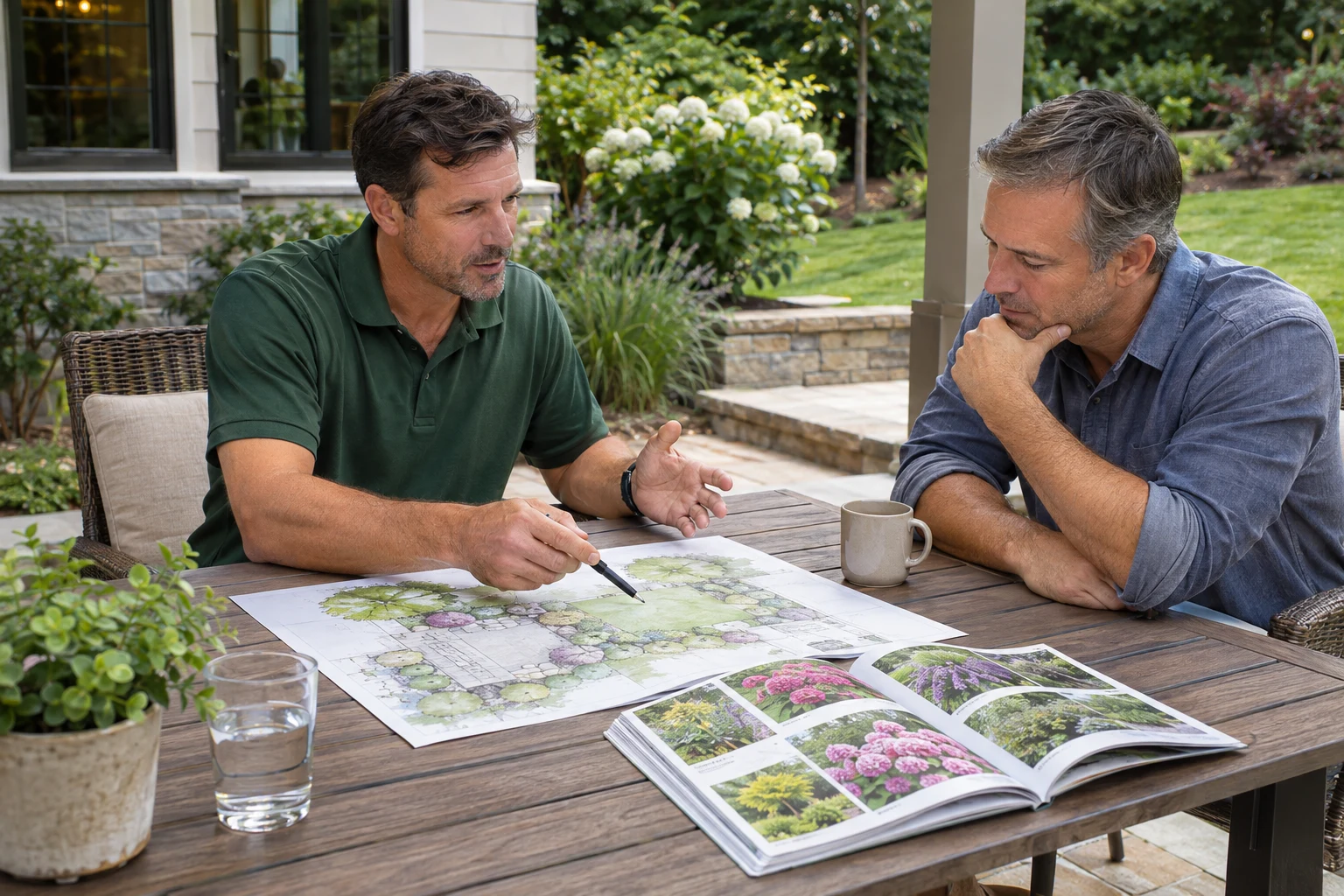
Choose photographs that relate to the specific service. Real completed work can support the offer when you can verify your role and permission to publish it. Generic imagery can establish context but cannot prove a project history.
Keep important service information in readable copy rather than expecting a gallery to explain it. Inspect the page on a phone, where the visitor may see only one photograph and a short passage at a time.
Connect related decisions without sending everyone everywhere
A customer reading about garden renovation may need to understand the consultation before arranging it. A maintenance customer may need agreement details instead. Add links when the next page helps that decision, using a natural description of the destination.
Keep the site structure understandable. A service overview can help visitors find the right page, while breadcrumbs and navigation help them recover their place. Contextual links should make sense within the passage rather than operate as an unrelated list.
Check the page set against actual inquiries
Read the pages beside recent customer questions. If callers cannot tell maintenance from design, improve those explanations. If several pages repeat the same answer, review whether each has a distinct role before planning changes.
Preserve existing useful addresses until any change is explicitly agreed. A content review should identify a duplication problem without silently deleting pages or inventing new location coverage.
Put it into practice
Organize the website around real services
Our landscaping website and marketing service starts with the work you offer and the decisions customers need to make. Bring the current page list, service boundaries and recurring inquiry questions.
Discuss your service pages