
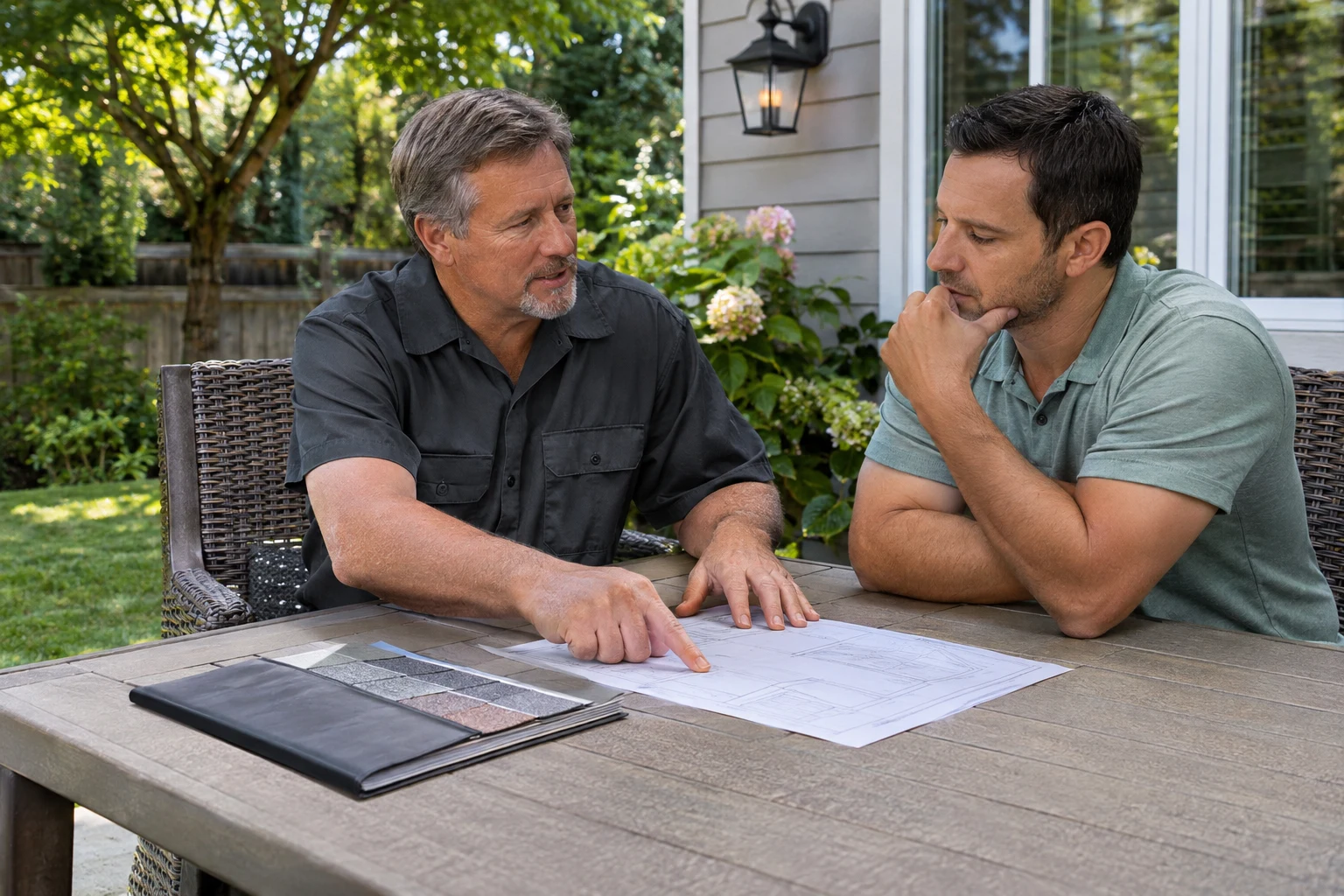
Roofing website trust signals should give buyers accurate evidence about the business and its offer. Generic badges and broad claims are easy to add, but they do not answer whether your company fits a particular project.
Review identity, credentials, work examples and estimate information as facts that someone should be able to verify.
Make the business identity consistent
Check the company name, contact details and service territory across the website’s main pages. Explain the actual business behind the enquiry route. A visitor should not have to guess whether they are contacting a roofing contractor, a referral site or an unrelated lead source.
Keep office and service-area descriptions accurate. Traveling to a place is different from having a staffed branch there. Do not use an unverified address or a generic building image to create a local presence. The office should recognize and be able to support every location statement the site makes.
Verify the badges before using them
List every credential, membership, manufacturer relationship and warranty claim shown on the site. Find the current evidence and confirm what wording and logos the business is permitted to use. Check whether the statement applies to the company, a specific employee, a product or a particular project.
Remove expired or unsupported items. A badge that resembles an official credential can mislead even if no detailed claim accompanies it. Where customers need more information, provide a sensible route to ask or verify rather than filling the page with unclear symbols.

Use real work as evidence with limits
A genuine project image can show the kind of work the company performs. It cannot alone establish installation quality, remaining service life or suitability for another building. Keep surrounding text accurate about the project and the company’s role, with permission for any customer information used.
The roofing project-photo guide explains how to organize rights and context. Illustrative images can support general service information where permitted, but they should not be presented as a portfolio of completed client work. If no verified case study is approved, explain the real process instead.
Give reviews and proposals useful context
Use only genuine reviews that the business may lawfully and appropriately reproduce, preserving their meaning. Do not create customer quotes, merge several reviews into one or imply that a selected review establishes a typical outcome. Keep private service disputes and identifying customer details out of public replies.
Estimate information also contributes to clarity. Explain how a buyer requests an estimate, who reviews the scope and how questions are handled. Avoid blanket statements about competing roofers. Your business can explain its own process and evidence without asserting that every different approach is untrustworthy.
- Verify identity and service-area statements.
- Confirm current evidence behind each credential claim.
- Check portfolio permissions and real project context.
- Explain how buyers can ask about the proposed work.

Keep the proof current after the redesign
Assign ownership of credential checks, review selections and project assets. Record where each item appears so a change can reach every affected page. A site that was accurate at launch can become misleading when a membership expires or a service is withdrawn.
ClickK’s website and marketing support for roofing businesses can include organizing approved proof and presenting it clearly. Your company supplies the verified facts and permissions. Start with the strongest claims on the page and make sure each has a source before adding more visual reassurance.
Put it into practice
Choose a useful next step
Inventory the claims visible above the fold and confirm what a customer could use to verify each one.
Discuss your marketing priorities