
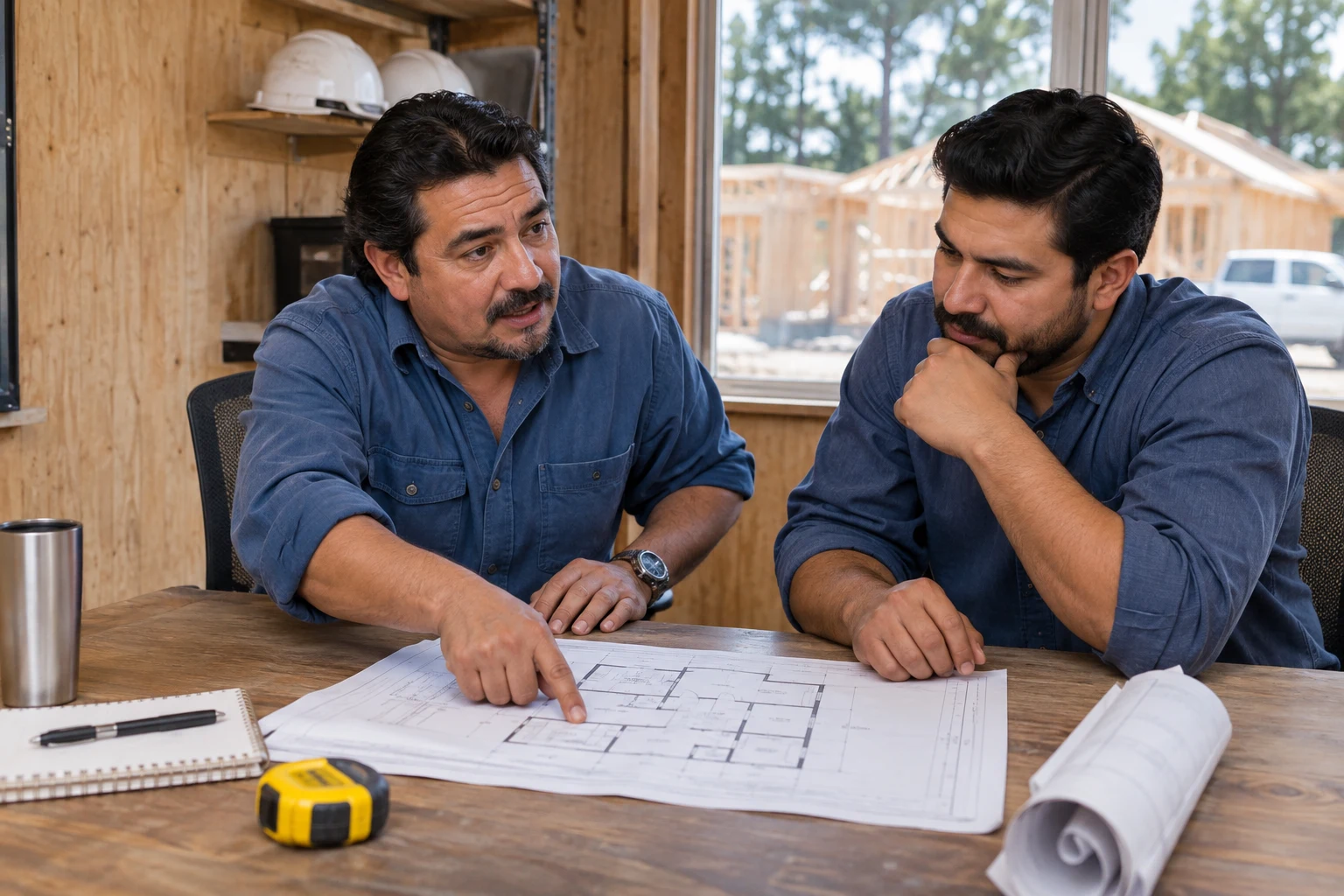
A construction marketing agency brief should explain the work your business wants, the buyers it serves and the inquiry journey the marketing must support. Settle those decisions before comparing a list of channels.
The brief gives an agency enough context to recommend a useful scope. It should also make responsibilities, costs and evidence of completion understandable to your team.
Describe the business you are marketing now
List current services, project types, geographic boundaries and the work you decline. Explain which priorities matter most and who decides whether an inquiry fits. Do not describe a future capability as an established offer.
Include the buyer's typical first question and how a project moves from inquiry toward a proposal. A company pursuing commercial packages needs different information from one focused on homeowner renovations.
Bring the sources the agency should preserve
Provide the current website page list, accurate business details and available approved project assets. Identify useful existing content and any addresses that must remain. Explain where permissions or factual review are still needed.
Add reliable search, campaign and inquiry evidence where available. Mark missing information clearly. A lack of records is a measurement gap, not permission to invent a baseline or declare that an existing page has no value.
Explain where the customer journey breaks down
Describe the observed problem: unsuitable requests, unclear capabilities, a difficult mobile inquiry path or proposals losing context during follow-up. Use actual examples that can be shared appropriately rather than diagnosing every issue as insufficient traffic.
Name the staff member who receives inquiries and the person who can approve service claims. The agency needs those responsibilities to scope forms, customer records and content review realistically.
- Desired project mix and audience
- Current service and geographic boundaries
- Existing website and approved evidence
- Observed inquiry or follow-up problem
- Access and review owners
- Delivery decisions the proposal must answer

Separate deliverables and continuing costs
Ask the proposal to identify pages, content, creative, campaign management and workflows. Distinguish initial work from ongoing support, media spend and software usage. State what your team supplies and how changes are handled.
Request a sequence that addresses the known constraint. A rebuild is not automatically the answer when the existing site is useful but the service explanation or inquiry handoff needs attention.
Define what evidence will support acceptance
Agree how you will review the actual copy, mobile experience and inquiry path. Ask what reporting distinguishes suitable opportunities from raw submissions and who supplies later proposal outcomes.
Keep promises realistic. Rankings, a guaranteed project volume and unverified revenue projections are not substitutes for a clear scope and inspectable delivery. Your brief should help you compare the work and responsibilities being offered.
Put it into practice
Start the proposal conversation with useful context
ClickK's construction marketing service connects website, acquisition and agreed customer follow-up. Bring the brief, current assets and the project opportunities you want the plan to support.
Discuss your construction marketing brief